


Quality 4.0 basics
What is Quality 4.0?
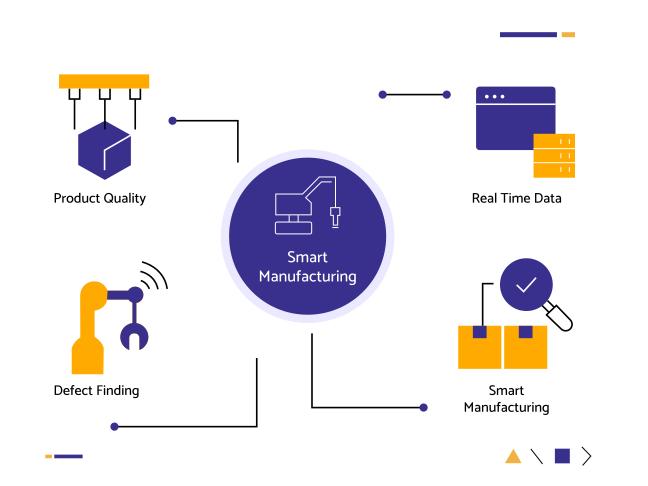
Quality 4.0 is one of Industry 4.0 applications: an intersection of people, technology, big data and analytics to improve product quality, identify defects automatically, and get actionable insights from real-time data. It’s a smart manufacturing approach that builds a flexible, responsive, and highly efficient QC process, strengthening existing QC teams.
Outdated vs. modern quality management
Give your traditional QMS a new spin with Industry 4.0 standards
| Outdated quality management is exhausting your revenue | Quality 4.0 frees up your resources from regular checks |
|---|---|
❌ Standard operating processes to detect and control defects; may not be feasible for dynamic workloads. | ✅ Auto-identifies quality concerns and alerts the team. Analyzes data over time to spot trends & suggest improvements. |
❌ Scaling production workloads require hiring more staffs; issues may get unnoticed. | ✅ Cloud solutions and digital monitoring tools allow easy scaling. |
❌ Manual checks, paper works, and quality data trapped within QMS applications (no scope for further analysis). | ✅ Automated process and documentation and multi-dimensional, aggregated view of quality data (could learn about patterns and find root-causes). |
❌ Detects only after the risk occurs. Chances of sending out defective products are high. | ✅ Can identify potential issues before they occur; before it impacts production and affects a whole batch. |
❌ Process-focused; manual and reactive control. | ✅ Goal-focused; automated, data-driven, and proactive control – brings digital transformation in quality management. |
Outdated quality management is exhausting your revenue
❌ Standard operating processes to detect and control defects; may not be feasible for dynamic workloads.
❌ Scaling production workloads require hiring more staffs; issues may get unnoticed.
❌ Manual checks, paper works, and quality data trapped within QMS applications (no scope for further analysis).
❌ Detects only after the risk occurs. Chances of sending out defective products are high.
❌ Process-focused; manual and reactive control.
Quality 4.0 frees up your resources from regular checks
✅ Auto-identifies quality concerns and alerts the team. Analyzes data over time to spot trends & suggest improvements.
✅ Cloud solutions and digital monitoring tools allow easy scaling.
✅ Automated process and documentation and multi-dimensional, aggregated view of quality data (could learn about patterns and find root-causes).
✅ Can identify potential issues before they occur; before it impacts production and affects a whole batch.
✅ Goal-focused; automated, data-driven, and proactive control – brings digital transformation in quality management.
QC and QA are two different things
Quality assurance vs. Quality control
Both QC and QA are about quality management but have different purposes. Quality control is about finding quality issues while quality assurance is about preventing problems. While QC teams work on preventing defective products from reaching customers, QA teams strive hard to improve all aspects of quality management.
Example of QC is checking finished products for defects and example of QA is conducting process audits.
Is Quality 4.0 worth it?
Benefits of Quality 4.0
Predict & prevent

Transparent traceability
Work happens at turbo mode
Unparalleled standards
Components of Quality 4.0
Quality 4.0 principles – the pillars of trail-blazing industry standards
People
People is one of the major pillar of Quality 4.0 in manufacturing, as it’s all about combining technology with human expertise. While tools like AI, IoT, and big data provide insights, people are key to making it work. It takes successful collaboration from teams like R&D, customer service, supply chain, and production to ensure everything runs smoothly. Technology predicts potential issues, but it’s human judgment that turns those insights into action for better quality management.
Processes
Quality 4.0 technologies aren’t just for the quality department — it requires processes that connect manufacturing and quality control from end to end. These processes should be flexible, streamlined, and agile to support continuous improvement. Setting clear goals, defining steps, choosing the right tools, and identifying involved teams are key—all tailored to company’s needs. Examples include real-time defect inspection using AI, enabling data-sharing practices, integrating customer feedback into product development, and automating compliance reporting for smoother audits.
Technology
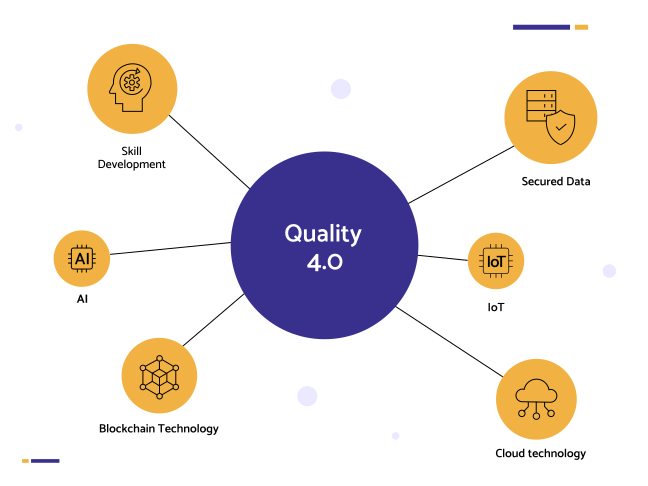
Technology plays a crucial role in Quality 4.0 - from big data to cloud to AI and IoT. IoT uses sensors to provide real-time data on metrics like temperature and pressure. Big Data Analytics helps collect and process data from machines, QC systems, ERP, and other sources to generate actionable insights. Cloud Computing centralizes data storage, ensuring seamless access across multiple locations. AI and Machine Learning improve the accuracy of insights and help identify the root causes of defects. And there is augmented reality, digital twins, and blockchain technology too.
Our story in stats
Known for agility, accuracy, and artistic story-telling
50+
Data professionals
10+
Years of experience
50+
Projects delivered
96%
Satisfactory customers
CUSTOMER SPOTLIGHT
Success stories from businesses like you

CPG manufacturers use predictive maintenance analysis to reduce downtime
30%
Reduction in downtime
25%
Maintenance cost reduction
How did packaged goods manufacturers reduce maintenance costs by 25% and improve overall equipment effectiveness with a predictive maintenance approach?
Read full story
Data analysis helped pharma company bring down production costs
55%
Increase in production efficiency
15%
Reduction in night-shift expenses
How did a pharma company achieve cost savings through improved defect tracking, reduced rejections, and optimized manpower costs?
Read full storyFAQs
Got questions? We got you covered.
How to forecast defect trends?
How to optimize resources?