


What is zero defect manufacturing?
Zero defect manufacturing (ZDM) is the new quality standards
Remember when Philip Crosby said, ‘Quality is free’ in 1961? He was implying zero defect manufacturing – doing things right rather than fixing them later. ZDM is achievable when all the manufacturing systems work in unison – systems, tools, people, and standardized processes. With a little predictive power and a lot of data-driven quality control, there can be proactive quality management in all stages – taking close to ZDM.
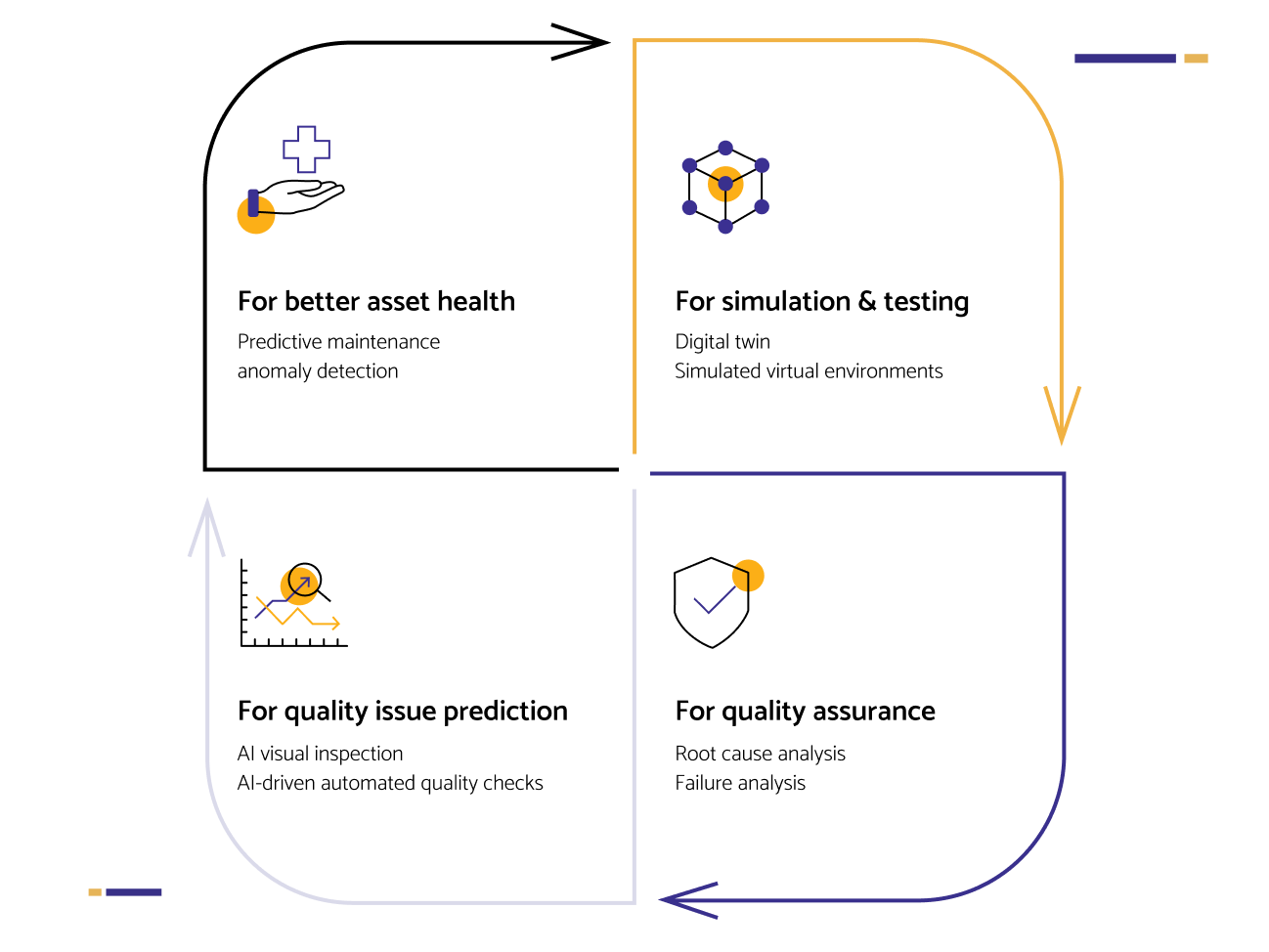
Traditional vs zero defect manufacturing
ZDM – Your key to effective & proactive quality control
| Defects identified only after it occurs or after production | ZDM predicts and prevents defects in advance |
|---|---|
❌ Slowed down production process due to manual quality checks | ✅ Automated systems functioning with little human intervention, speeds up entire production. |
❌ Works too hard to reach passable quality standards. | ✅ No error is tolerated. Achieves zero defect stage. |
❌ Cost waste due to reworks, recalls, and scrap handling. | ✅ Fewer waste means fewer costs – both in terms of downtime & defect handling. |
❌ Process improvement happens only through quality assurance. Requires too much effort to implement. | ✅ Continuous process optimization through automated data insights based on past & real-time data. |
❌ Manual intervention is needed all the time. | ✅ Employees receive predictive alerts, paying attention only when needed. |
Defects identified only after it occurs or after production
❌ Slowed down production process due to manual quality checks
❌ Works too hard to reach passable quality standards.
❌ Cost waste due to reworks, recalls, and scrap handling.
❌ Process improvement happens only through quality assurance. Requires too much effort to implement.
❌ Manual intervention is needed all the time.
ZDM predicts and prevents defects in advance
✅ Automated systems functioning with little human intervention, speeds up entire production.
✅ No error is tolerated. Achieves zero defect stage.
✅ Fewer waste means fewer costs – both in terms of downtime & defect handling.
✅ Continuous process optimization through automated data insights based on past & real-time data.
✅ Employees receive predictive alerts, paying attention only when needed.
Zero defect is more efficient than its predecessors
Zero Defect vs Six Sigma
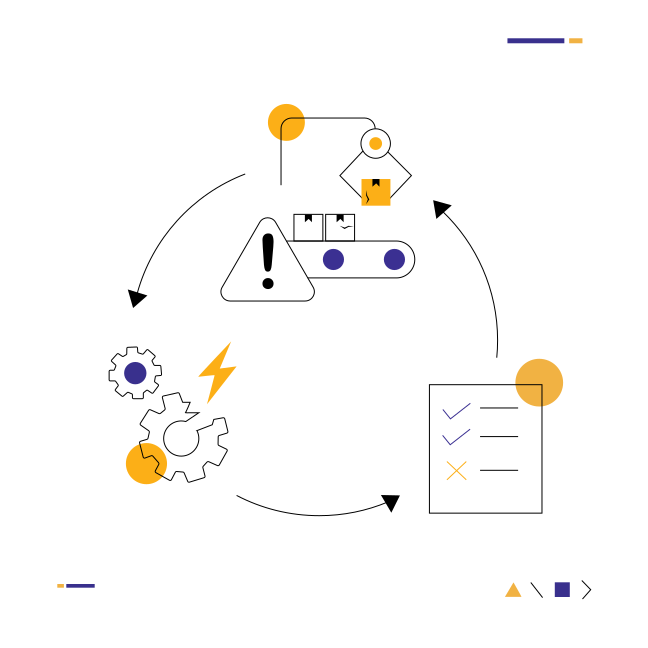
Both six sigma and zero-defect manufacturing has the same focus: to reduce quality issues & defective products, and improve quality standards, but their approach is different. The major difference between zero-defect and six sigma is that six sigma still allows defects to happen (DPMO = Defects Per Million Opportunities), but ZDM insists zero defect.
Six sigma strives for process improvement through statistical methods; ZDM aims for prevention & nullification of defects through automated processes, data & AI, monitoring tools, etc.
Zero defects; fewer costs; & high standards & satisfaction.
Benefits of zero defect manufacturing
Reduced cost

Customer trust
Better processes
Regulatory compliance
The role of AI in ZDM
Achieving zero defects in manufacturing using AI
Getting things right the first time and achieving zero defect stage is not easy; statistical processes and manual monitoring alone cannot help. It requires a combination of suite – predictive maintenance, real-time quality-control with AI-vision, anomaly detection, and AI-assisted decision making.
Predictive maintenance and analytics solutions help with analyzing the entire production setup for any possible flaws that could cause issues, alerting the team prior it happens.

Step-by-step process to set up zero defect manufacturing
How to get to ZDM – best practices
Meticulous data management
Predictive quality control needs real-time data streaming from machinery (sensor data denoting temperature, pressure, emissions, etc), production systems, and other applications. Likewise, historical data processing can help understand fault patterns and avoid impending risks.
Predictive tools
Predictive models and monitoring tools must be in place to detect issues in advance – be it quality problems or machinery malfunctions. Even a slight deviation from regular functioning could be detected, allowing fix to happen before the production of a defective piece. Along with optimized system functioning, ability to do root-cause analysis with historical data and find long-term fix is an added plus.
Training
This is about setting Standard Operating Procedures to achieve near-zero defects and training employees, making it their reference point. Employees should also be trained on using AI-driven prediction models, analytics, IoT devices and bring proactive suggestions, while collaborating with the rest of the production team.
Continous improvement
With data analytics solutions, periodic reports, and monitoring dashboards, one can visualize key metrics and monitor them—setting goals to improve them. Looping feedback into production bring make great improvements too – bringing to light customer complaints, return reasons, repair requests, and other suggestions.
Our story in stats
Known for agility, accuracy, and artistic story-telling
50+
Data professionals
10+
Years of experience
100+
Projects delivered
96%
Satisfactory customers
CUSTOMER SPOTLIGHT
Success stories from businesses like you

Promoting lean manufacturing through inventory analysis
23%
Reduction in understocking
28%
Decrease in overstocking
Global manufacturer reduces inventory overstocking by 23% and understocking by 28% using data-driven decisions.
Read full story
Smart manufacturing: turning forecasts into budget and capacity planning
Eliminated more than 90% of the manual pre-planning work, saving 240 hours annually through forecast analysis reports, while ensuring accuracy and timely production planning.
Read full storyFAQs
Clear answers to your complex questions
What are the zero-defect manufacturing strategies?
What are some predictive analytics in zero defect manufacturing examples?
Which type of manufacturing has the goal of producing zero defects?
How does AI improve efficiency in manufacturing?
What does zero defect mean for other industries?
Zero defect manufacturing examples and use cases

Electronics
Data analysis & predictive maintenance can play a role, reducing unexpected downtime and forecasting equipment failures, reducing manufacturing defects.

Pharma industry
In a place where even minute deviations cause huge variations, predictive maintenance & AI-driven quality control can help with precise mixing & prevent contamination.

FMCG
AI-driven inspection & predictive analytics can together minimize wrong packaging, labelling, or other mixing/portioning errors, ensuring lean manufacturing & zero waste.

Textile
AI-based inspection systems can be used to detect pattern inconsistencies, wrong weaving, & incorrect packaging that are the major challenges for large-scale textile industries.

Plastic & molding
Precision with pressure, set-off time, cooling period, etc., are much needed in the molding industry, where AI & automated processes can be of huge assistance.

Automotive
Vehicle manufacturing and assembly requires AI-driven visual inspection to ensure flawless surface quality & zero costly reworks.