


What's automated quality control?
Automated quality in manufacturing
Automated quality inspection in manufacturing & quality control automation is about setting up a smart checking system to analyze product quality on the go. Identify cracks, deformities, wrong packaging & labelling, wrong sizes, & other product damages.
Think of an automobile assembly line. Rather than QC professionals scanning every part, flag faulty ones, & replace it, the automated quality control system will raise alerts and notify, expediting the whole checking process.
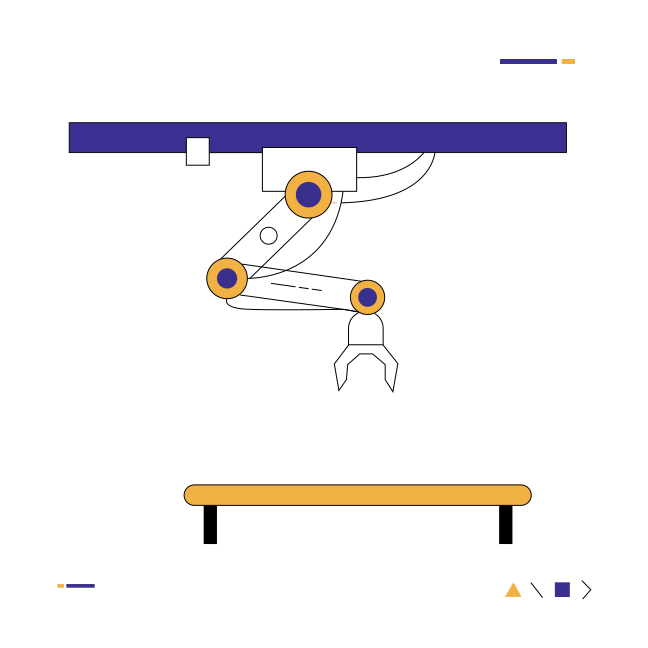
Quality control in modern manufacturing era
Getting quality inspection done without moving a finger
| Fixed production volumes & workload; can't optimize much | Scale up or down to suit your demand with auto-quality checks |
|---|---|
❌ Quality data remains useless as it’s trapped within respective applications. | ✅ From sensor data to cx feedback, everything is connected, hence constant alert & continuous improvement. |
❌ Time-consuming. Takes more time & qualified QC professionals to inspect & manage quality concerns. | ✅ Fast and on-the-go quality control process. Detects issues immediately. |
❌ Human errors may happen. Affects SLAs if defected products reach customers. | ✅ Automated quality inspection + QC team can achieve near-zero effects. |
❌ Limited data analysis. Only relies on error logs, experience, and checklists. | ✅ Real-time data analysis and continuous process optimization and improvement. |
❌ High cost and waste, both due to defective products & intense labor requirements. | ✅ Reduces cost by minimizing labor involvement, product recalls, waste, and scrap. |
Fixed production volumes & workload; can't optimize much
❌ Quality data remains useless as it’s trapped within respective applications.
❌ Time-consuming. Takes more time & qualified QC professionals to inspect & manage quality concerns.
❌ Human errors may happen. Affects SLAs if defected products reach customers.
❌ Limited data analysis. Only relies on error logs, experience, and checklists.
❌ High cost and waste, both due to defective products & intense labor requirements.
Scale up or down to suit your demand with auto-quality checks
✅ From sensor data to cx feedback, everything is connected, hence constant alert & continuous improvement.
✅ Fast and on-the-go quality control process. Detects issues immediately.
✅ Automated quality inspection + QC team can achieve near-zero effects.
✅ Real-time data analysis and continuous process optimization and improvement.
✅ Reduces cost by minimizing labor involvement, product recalls, waste, and scrap.
Difference between quality control and quality inspections
Quality inspection vs. quality control
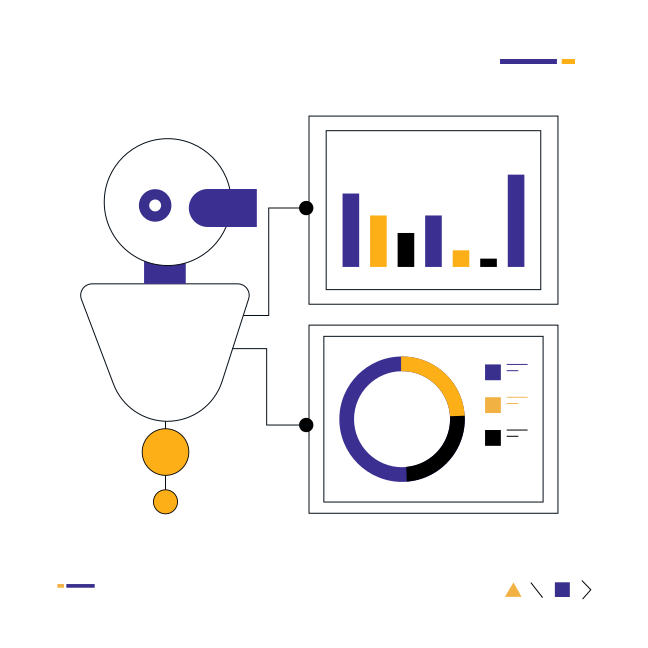
Quality inspection is a manual or automated examination of products to identify defects whereas quality control is more of a preventive measure to sustain product quality & consistency for all manufactured products.
Quality inspection is meant only for the end of the production process, but quality control is for identifying and preventing defects throughout the cycle. The goal of quality inspection is to eliminate broken, cracked, and defective products from the lot; quality control takes a more holistic approach, reducing defects before it can happen.
Why do you need automated quality control?
Benefits of automated quality control
Increased productivity

No human errors
Consistent quality standards
Compliance assurance
The role of AI in QC – how AI improve quality control?
Automated visual inspection
Automation of product inspection through AI-enabled cameras, 3d scanners, & ultrasound to detect defects.
Predictive maintenance
Machine health, downtime & failure prediction to run optimal loads & maintain production efficiency.
Anomaly detection
Detection of any unusual values in production data, foreshadowing potential issues before it escalates.
Root-cause analysis
Run through data and find root cause to recurring defects & quality issues.
Supply chain quality assurance
Real-time tracking of supplier data & flagging raw material inconsistency to maintain desired quality.
Adaptive testing
Modifies quality testing conditions to suit each product variation; hence maintaining precision.
Our story in stats
Known for agility, accuracy, and artistic story-telling
50+
Data professionals
10+
Years of experience
100+
Projects delivered
96%
Satisfactory customers
CUSTOMER SPOTLIGHT
Success stories from businesses like you

Global infra company reduces cost wastage through stock tracking
Setting up Power BI reports to track inventory levels, aging stocks, etc. for a global infrastructure company.
Read full story
Improving manufacturing productivity through conveyor operations analysis
12%
Increase in manufacturing efficiency
18%
Reduced reduction rates
Manufacturing company reduces product rejection by 18% addressing operational inefficiencies through data-driven solutions.
Read full storyFAQs
Got questions? We got you covered.
What is the QA inspection process?
What is QC in inspection?
What are the 4 types of quality control?
Industries that benefit from AQC
Industries that benefit from automated quality control

Manufacturing
Manufacturing is the major industry where automated quality control is highly necessary. It could expedite all types of defect detection and inspection in assembly lines and reduce rework percentage.

Aerospace
Aerospace needs to be vigilant of even microscopic errors that affect safety and strength of the product. Automated quality control can save them from complex inspections & enhance their detection capabilities, ensuring structural integrity & precision.

Automotive
Automotive industry has many error possibilities like paint inconsistencies, scratches, surface flaws, and others. Auto-QC can detect them faster than human eyes, bringing instant fixes across the entire production cycle.

Foods & beverages
Automated quality control can help FMCG and CPG companies maintain product consistency, texture, color, measurements, and other micro factors. Identify any foreign materials, contaminants, or anomalies automatically.

Pharmaceuticals
The industry that requires utmost care and precision to avoid contamination, errors, low drug effectiveness, and CAPA rejections could use automated quality control to support fast production and testing.